BY THE RECORDASHEVILLE

Recovery

Where is recovery money going?

Washington gave Asheville its own $225 million rebuilding grant. As of June 30, 2026, the city reported $92.5 million of it committed to projects, $1.2 million drawn down and none yet recorded as spent. State lawmakers set aside more than $1 billion for Helene recovery in 2025, and Council had approved $219.5 million in Helene budgets by September 2026. Each is a different stage of money, so they can't be added together.

Period
September 2024 to September 2026
Area
City of Asheville, Buncombe County, and North Carolina (each labeled)
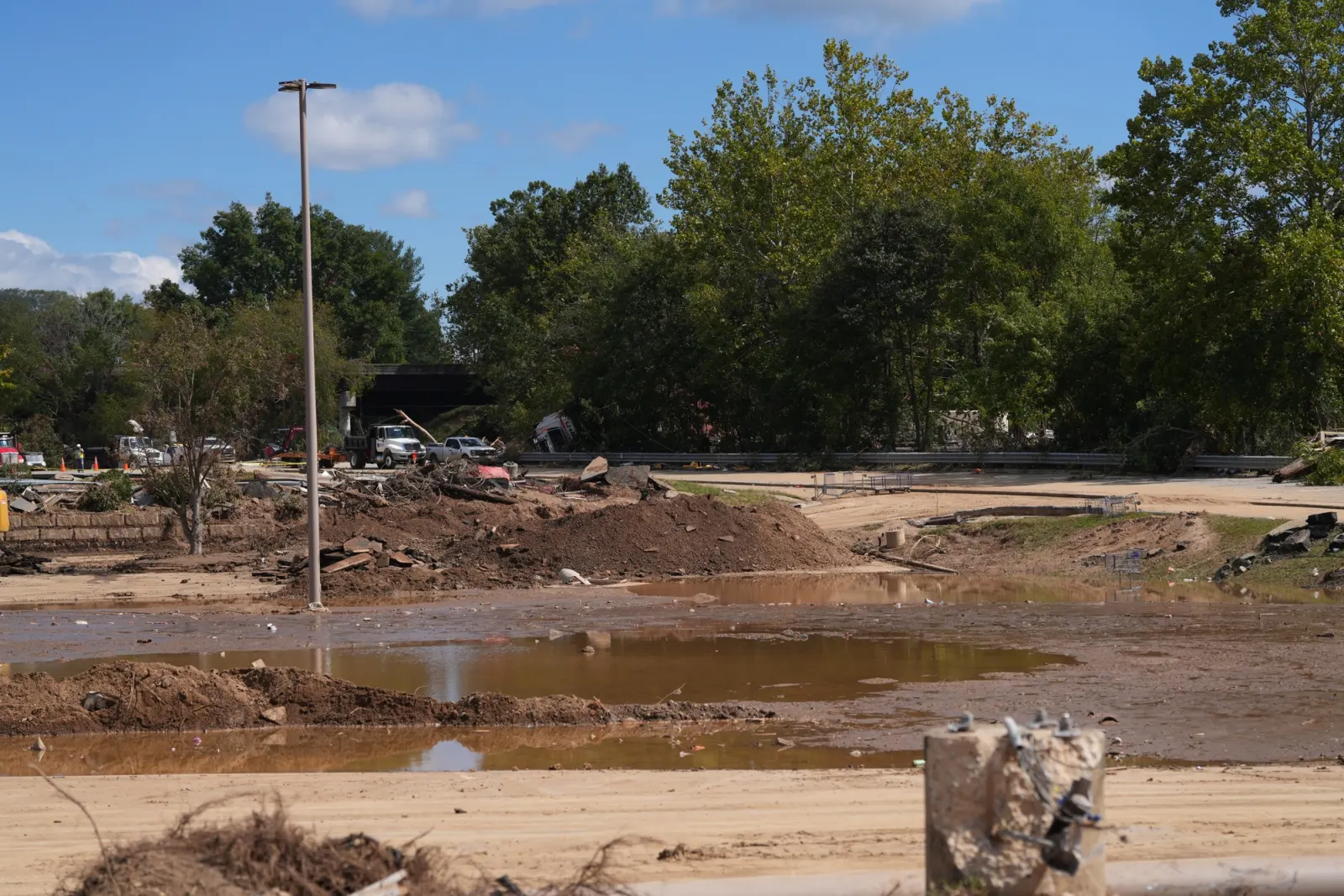
Debris caught on buildings above a mud-covered lot, marking how high the flood reached.
Debris marks the height of the flooding in Asheville on Oct. 2, 2024, five days after Helene.Photo: Madeleine Cook, FEMA. Source, Public domain (U.S. government work).

Each bar is a different stage of money, so they can't be added up. A dollar appropriated by the state may be the same dollar a city later budgets.

Federal government

  • Rebuilding grant to North Carolina

    $1.43B

    AllocatedJanuary 2025, Statewide
  • Rebuilding grant to the City of Asheville

    $225.0M

    AllocatedJanuary 2025, City of Asheville
  • FEMA aid approved for Buncombe County households

    $107.7M

    Approvedas of January 30, 2025, Countywide

Asheville's grant, as of June 30, 2026

  • Committed to recovery projects (obligated)

    $92.5M

    Obligatedto June 30, 2026, City of Asheville
  • Drawn down from the grant

    $1.2M

    Drawnto June 30, 2026, City of Asheville
  • Reported spent

    $0

    Spentto June 30, 2026 (report awaiting HUD review), City of Asheville

State of North Carolina

  • Disaster Recovery Act of 2025, Part I

    $524M

    AppropriatedMarch 2025, Statewide
  • Disaster Recovery Act of 2025, Part II

    $500M

    AppropriatedJune 2025, Statewide
  • Moved into the state's Helene Fund by the 2024 act

    $227M

    TransferredDecember 2024, Statewide

City of Asheville

  • Helene-related budgets approved by Council

    $219.5M

    Budgetedby September 8, 2026, City of Asheville

Why it matters: Each amount is shown at its own step: set aside, committed or spent. The steps are never added together.

Why it matters: Disaster money moves in steps. It is set aside first, then committed to projects, then spent. Committed is not the same as spent.

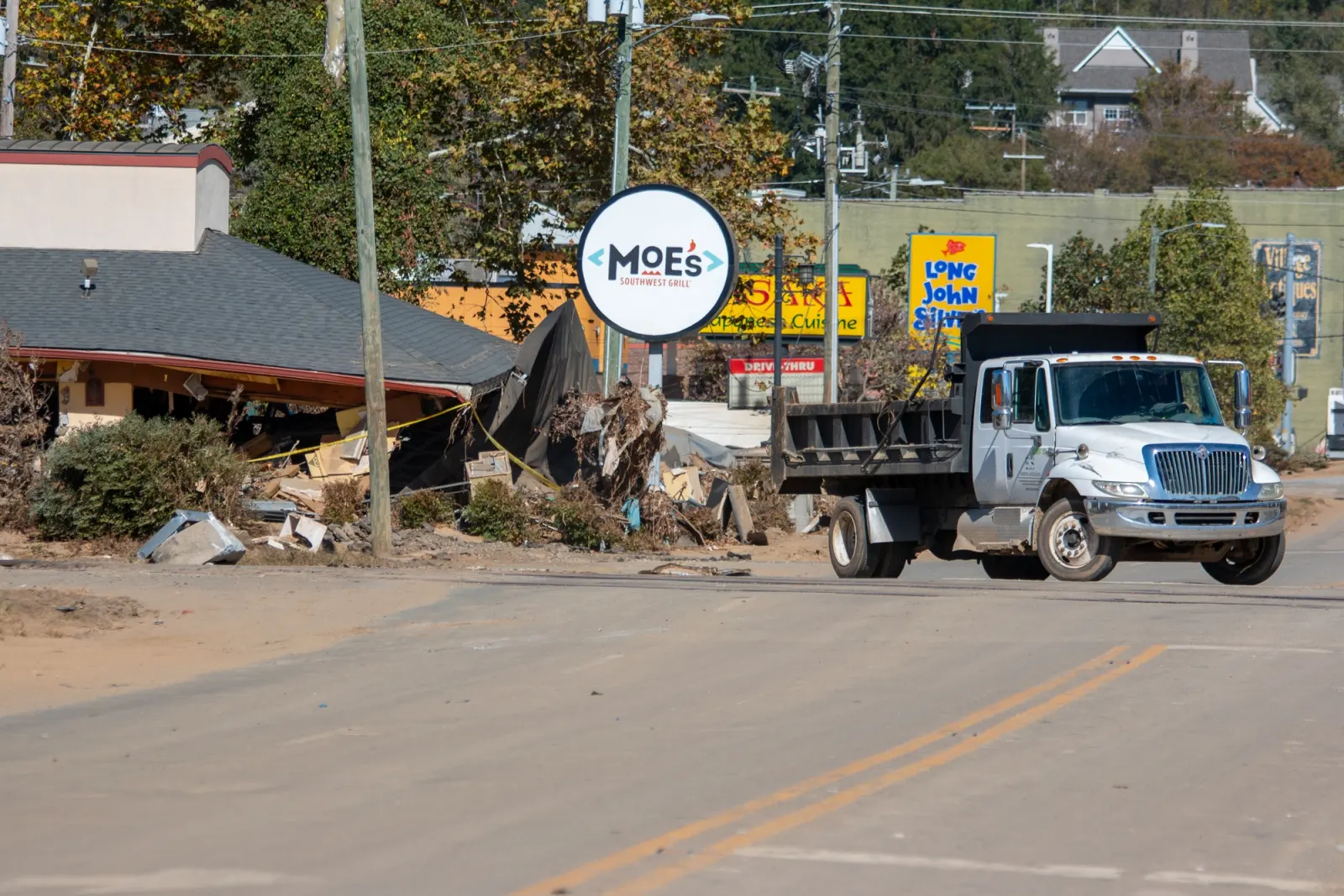
A dump truck on a debris-strewn street in Biltmore Village.
Cleanup in Biltmore Village in mid-October 2024.Photo: Dylan Burnell, U.S. Army Corps of Engineers. Source, Public domain (U.S. government work).
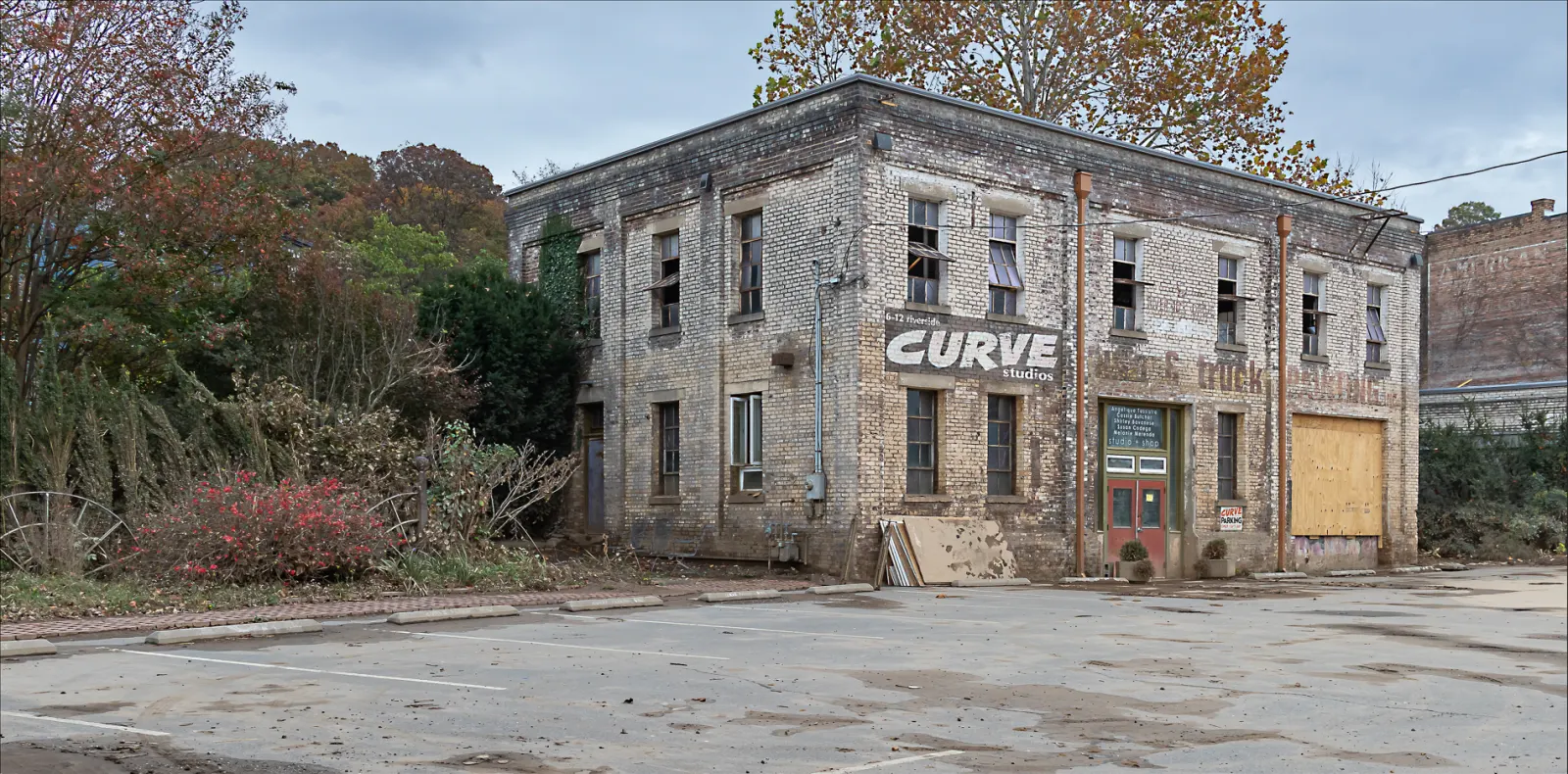
A damaged building in the River Arts District with debris piled in front of it.
The River Arts District about five weeks after Helene, with debris piled for removal.Photo: Bill McMannis. Source, CC BY 2.0.
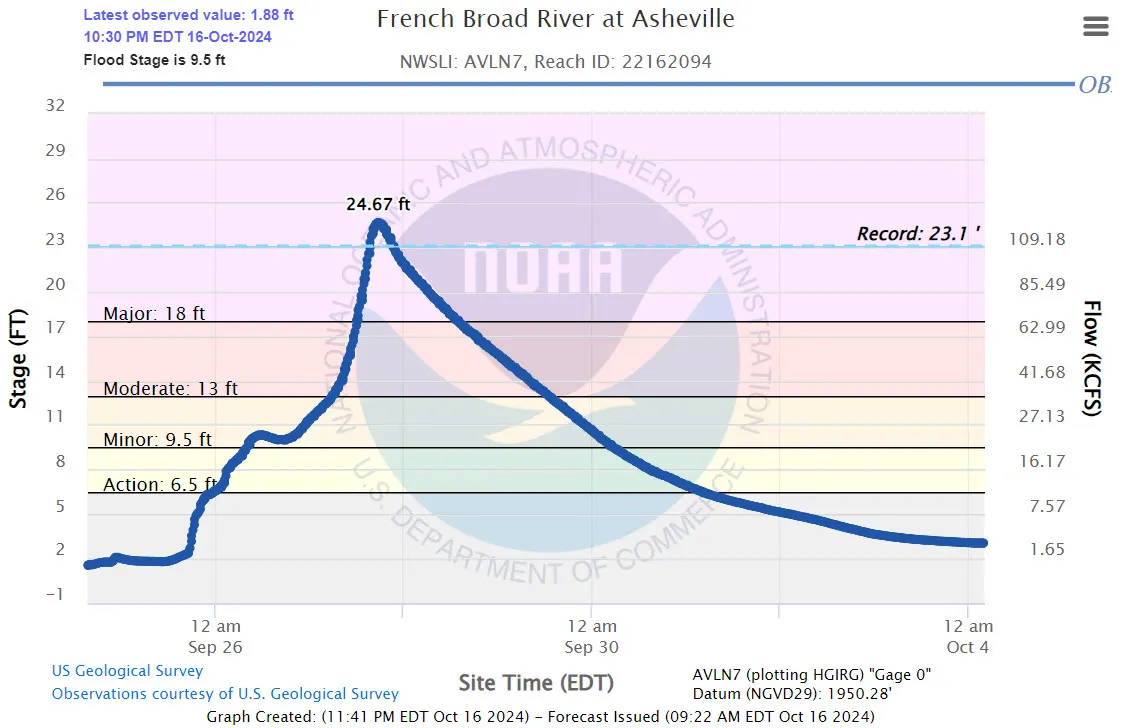
Chart of the French Broad River level at Asheville from Sept. 24 to Oct. 4, 2024, rising to a crest of 24.67 feet.
The French Broad at Asheville crested at 24.67 feet on Sept. 27, 2024, above the 1916 record of 23.10 feet.Chart: National Oceanic and Atmospheric Administration. Source, Public domain (NOAA).

What's been rebuilt, on the record

  1. October 10, 2024

    The 36-inch bypass water main was reconnected, restoring water from the North Fork Reservoir.

  2. November 18, 2024

    The citywide boil-water advisory was lifted.

  3. July 29, 2025

    The city's federal rebuilding grant agreement was signed.

  4. April 28, 2026

    Council approved a $994,849 contract to repair Helene damage at the North Fork Dam.

  5. September 8, 2026

    Council hired a planner for the Deaverview neighborhood, paid from the federal rebuilding grant.

Asheville's federal CDBG-DR grant

Asheville city

The U.S. Department of Housing and Urban Development allocated $225,010,000 in Community Development Block Grant disaster-recovery funds directly to the City of Asheville for Hurricane Helene, to be spent on unmet needs and mitigation within the city. The State of North Carolina received $1,428,120,000 separately.

What this can't tell you

  • Allocation is not disbursement and disbursement is not spend. The state's plan carries amendments; Non-Substantial Amendment 5 took effect October 3, 2026.
  • The city's grant agreement was executed July 29, 2025; HUD approved the state action plan April 24, 2025.
  • The state grant is administered by the Department of Commerce's Division of Community Revitalization, not the earlier NCORR program.

FEMA assistance to Buncombe County households

Buncombe County (countywide)

Federal Individual Assistance approved for Buncombe County households after Helene (disaster DR-4827, declared September 28, 2024), as reported in county briefing snapshots.

What this can't tell you

  • The two snapshots report different measures: total Individual Assistance (January 30, 2025) and the Individuals & Households Program (March 18, 2025). They are labeled, never combined.
  • The federal open-data endpoint for county-level Individual Assistance was unavailable, so county briefing documents are the source.
  • These are approved-amount snapshots, not a cumulative series and not a measure of unmet need.

What we don't know yet

  • Spending by program for the city's $225 million grant isn't in this record yet.
  • The city's Helene budget totals are described in different terms at different meetings, so this site doesn't chart them as a series.

Words on this page

CDBG-DR
Federal disaster-rebuilding grants from the U.S. Department of Housing and Urban Development, given separately to the city and the state.
FEMA Individual Assistance
Federal aid paid directly to households for repairs, rent, and other storm costs.
Appropriated, allocated, budgeted, spent
Stages money passes through. Lawmakers appropriate it, agencies allocate it to programs, councils budget it, and only then is it spent. A dollar at one stage isn't extra money at the next.
Veto override
Lawmakers enacting a bill even though the Governor rejected it.
Conference report
The final compromise version of a bill that both chambers vote on.